 Written by: PayAid
In the hyper-competitive e-commerce landscape of 2026, a 2-second delay or a “Payment Failed” screen isn’t just an inconvenience—it’s a lost customer. As transaction volumes surge and payment methods diversify (from UPI 2.0 to Digital Rupee), relying on a single payment gateway is no longer a viable strategy.
The secret weapon of high-growth enterprises? Dynamic Smart Routing.
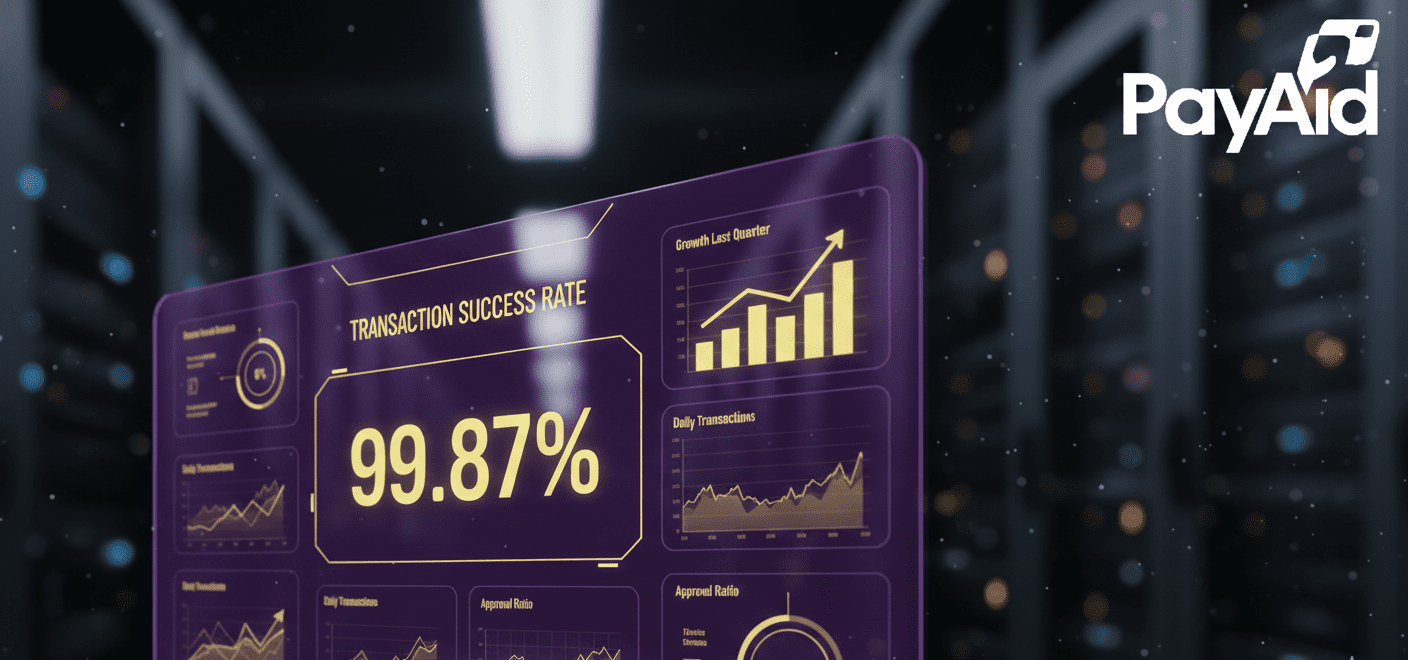
In this deep dive, we explore how PayAid’s payment orchestration platform uses multi-bank dynamic routing and payment cascading to boost transaction success rates by up to 20%.
Most merchants still use a direct integration with one Payment Gateway (PG). While simple, this creates a single point of failure. If that PG’s server goes down, or if the specific acquiring bank associated with that gateway experiences a spike in latency, 100% of your transactions fail.
In 2025 alone, downtime among major Indian banks resulted in millions of dollars in lost GMV. In 2026, Smart Routing is the insurance policy every merchant needs.
Think of Smart Routing as Google Maps for your payments.
When a customer clicks ‘Pay,’ a payment orchestrator like PayAid analyzes dozens of variables in real-time:
Bank Health: Is the issuing or acquiring bank currently experiencing downtime?
Transaction Type: Is it a UPI, Credit Card, or DC transaction?
Historical Performance: Which gateway has the highest success rate for this specific card bin or bank at this exact hour?
Cost: Which route offers the lowest MDR (Merchant Discount Rate) for this transaction?
The orchestrator then instantly routes the transaction through the path of least resistance.
A critical component of smart routing is Payment Cascading.
If a transaction fails at Gateway A (perhaps due to a technical error), PayAid doesn’t show a “Failed” message to the user. Instead, it “cascades” or triggers a secondary attempt through Gateway B or C in the background.
This happens in milliseconds. The user only sees a slightly longer “Processing” screen, followed by a “Success.” This invisible safety net is responsible for recovering 10–15% of transactions that would otherwise be abandoned.
Why are we seeing a 20% increase in success rates now?
AI-Driven Predictive Routing: In 2026, PayAid uses machine learning to predict bank failures before they happen by analyzing micro-patterns in transaction latency.
BIN-Level Optimization: Routing is now done at the Bank Identification Number (BIN) level. If HDFC’s Visa processing is slow but their Mastercard processing is fine, the orchestrator adjusts instantly.
Local vs. Global Rails: For businesses selling internationally, smart routing detects the user’s location and routes the payment through a local acquirer, drastically reducing cross-border declines.
A 20% increase in success rates isn’t just a technical metric. For a business doing ₹1 Crore in monthly sales, that’s an additional ₹20 Lakhs in recovered revenue every single month without spending a single rupee more on marketing.
Furthermore, it improves:
Customer Lifetime Value (LTV): Customers who have a seamless checkout experience are 60% more likely to return.
Operational Efficiency: Your finance team spends less time on manual reconciliations and dealing with “payment deducted but not received” complaints.
In 2026, your payment stack should be as intelligent as your marketing stack. Smart Routing and Payment Cascading are no longer “premium” features—they are the baseline for survival.
Ready to optimize your checkout?
Explore how PayAid’s Orchestration Platform can transform your payment success rates. [Contact our team for a demo today.]

Coming soon: Spend funds from your Ceve wallet at 46 Million merchants and ATMs worldwide. Can it get any easier than that? Just Grab The feature!!!



Plot No 4/2, Sector 1, Second Floor, RAM SVR, Madhapur, HUDA Techno Enclave, Hitech City, Hyderabad, Telangana – 500081